Origins
BAM (Breath Activated Meditation) is an ongoing series of physical computing and interactive projects in collaboration with Liyah Coleman exploring breath as a creative interface. This started as a solo meditation wearable, and has grown into an installation, an arcade game, with future iterations to come. Every iteration asks a different question about how breath can connect us with ourselves and those around us.
Mentorship for this project includes: Yeseul Song, Andre Lira, Christina Tang, Fabrizio Guccione, and Audrey Oh. And a special shout out to Avery Bedows and Jacob Brawer who offered inspiration and guidance as fellow creative technologists also working on breath and wellness projects.
Breathership (Installation)
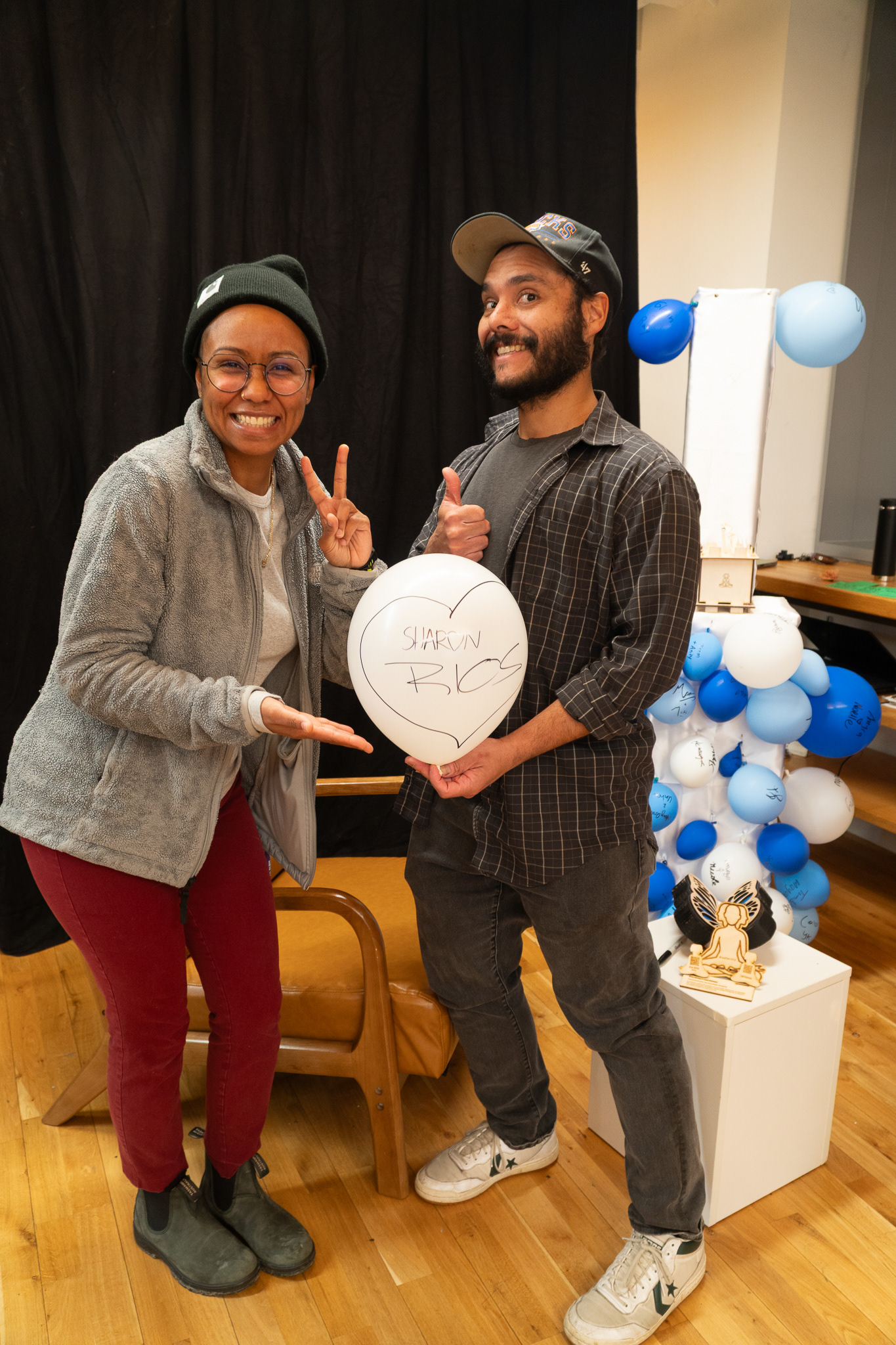
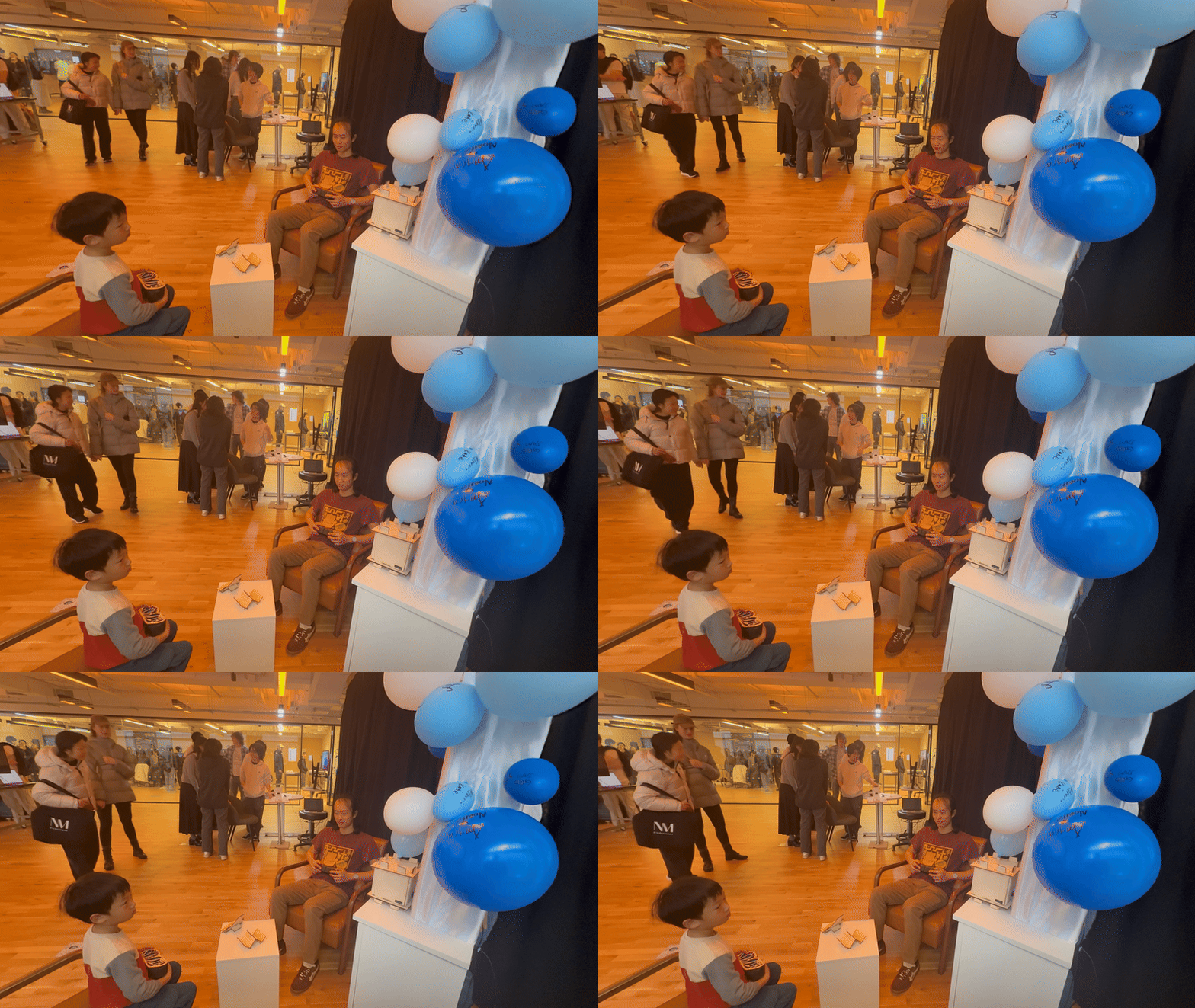
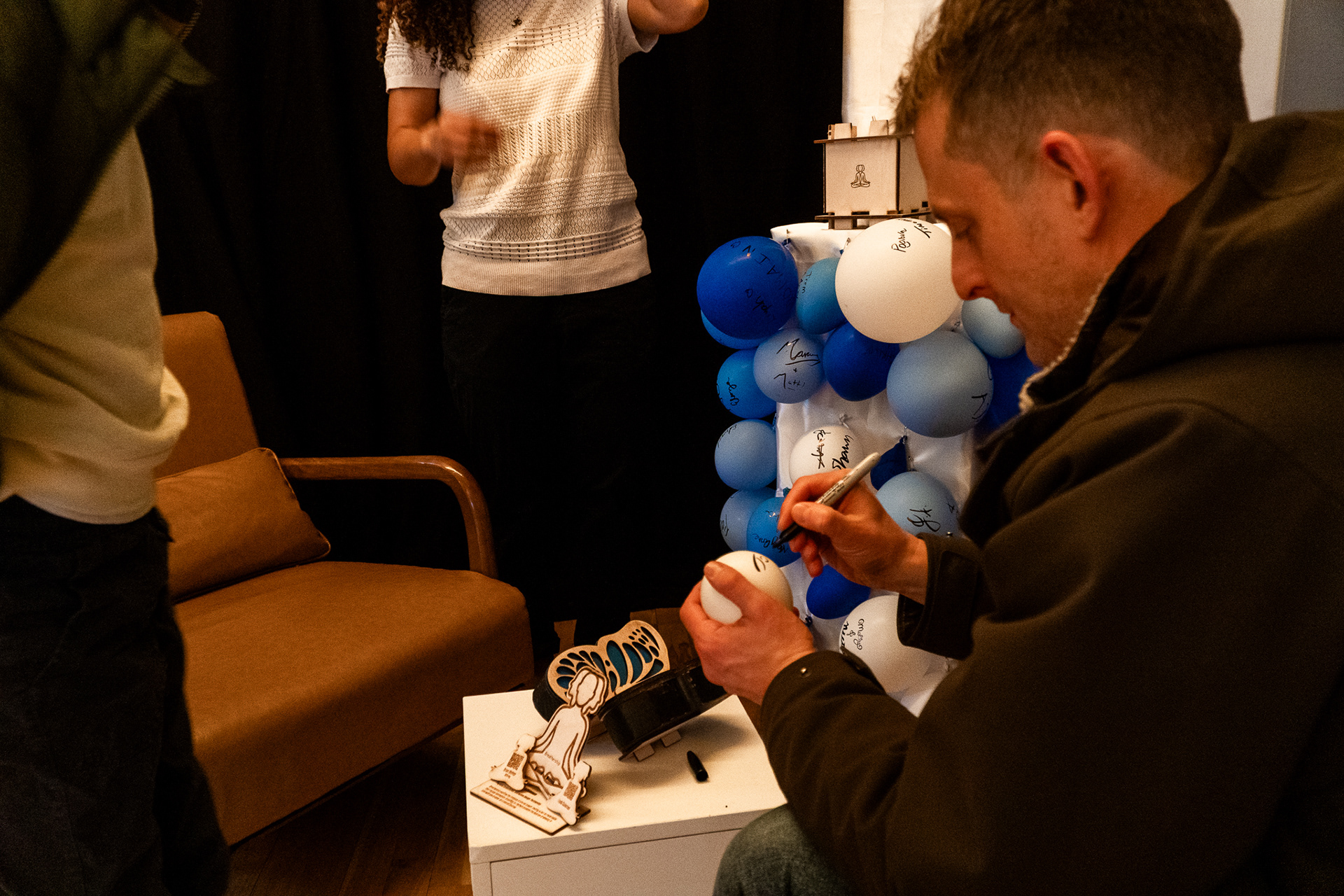
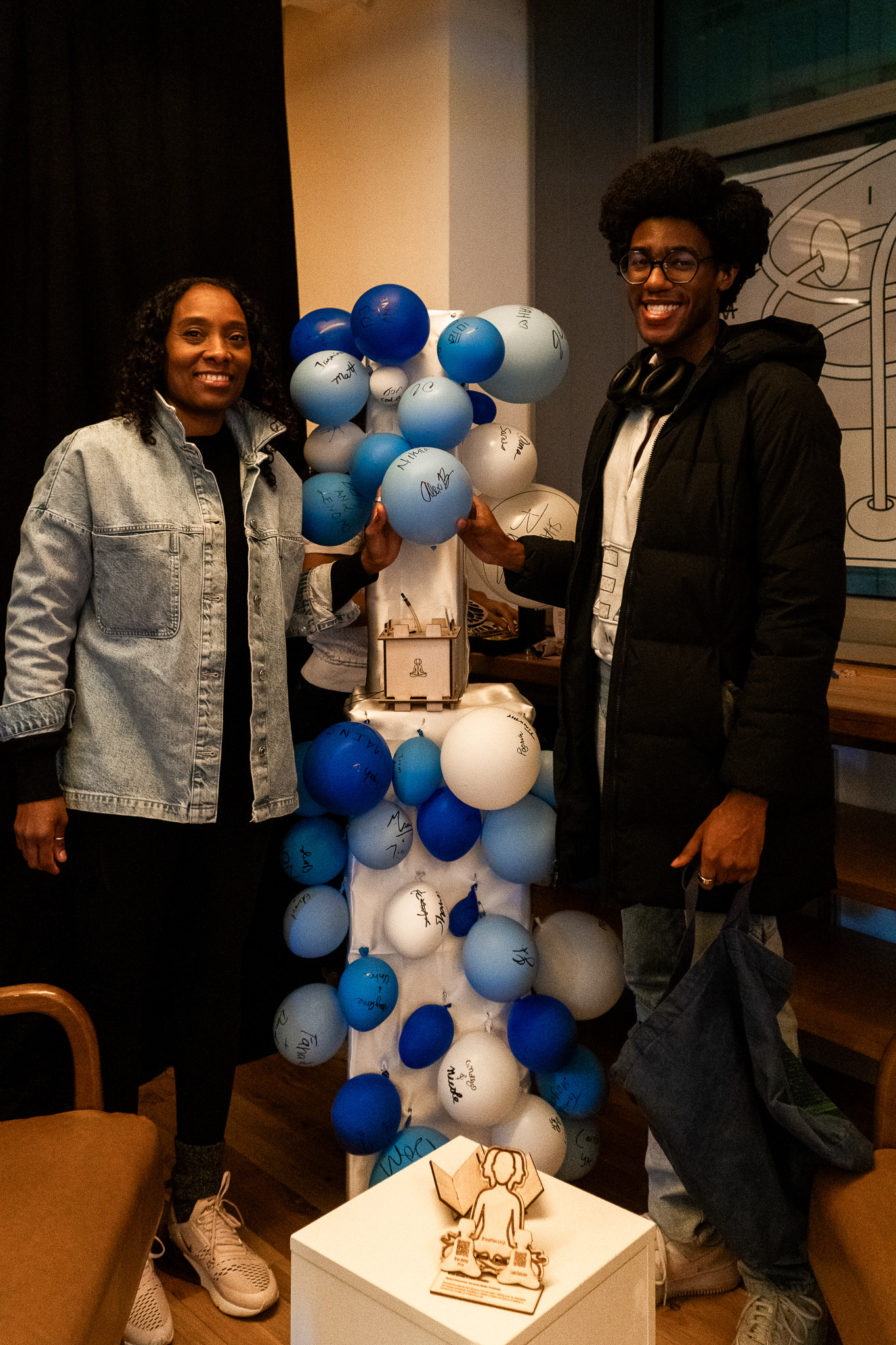
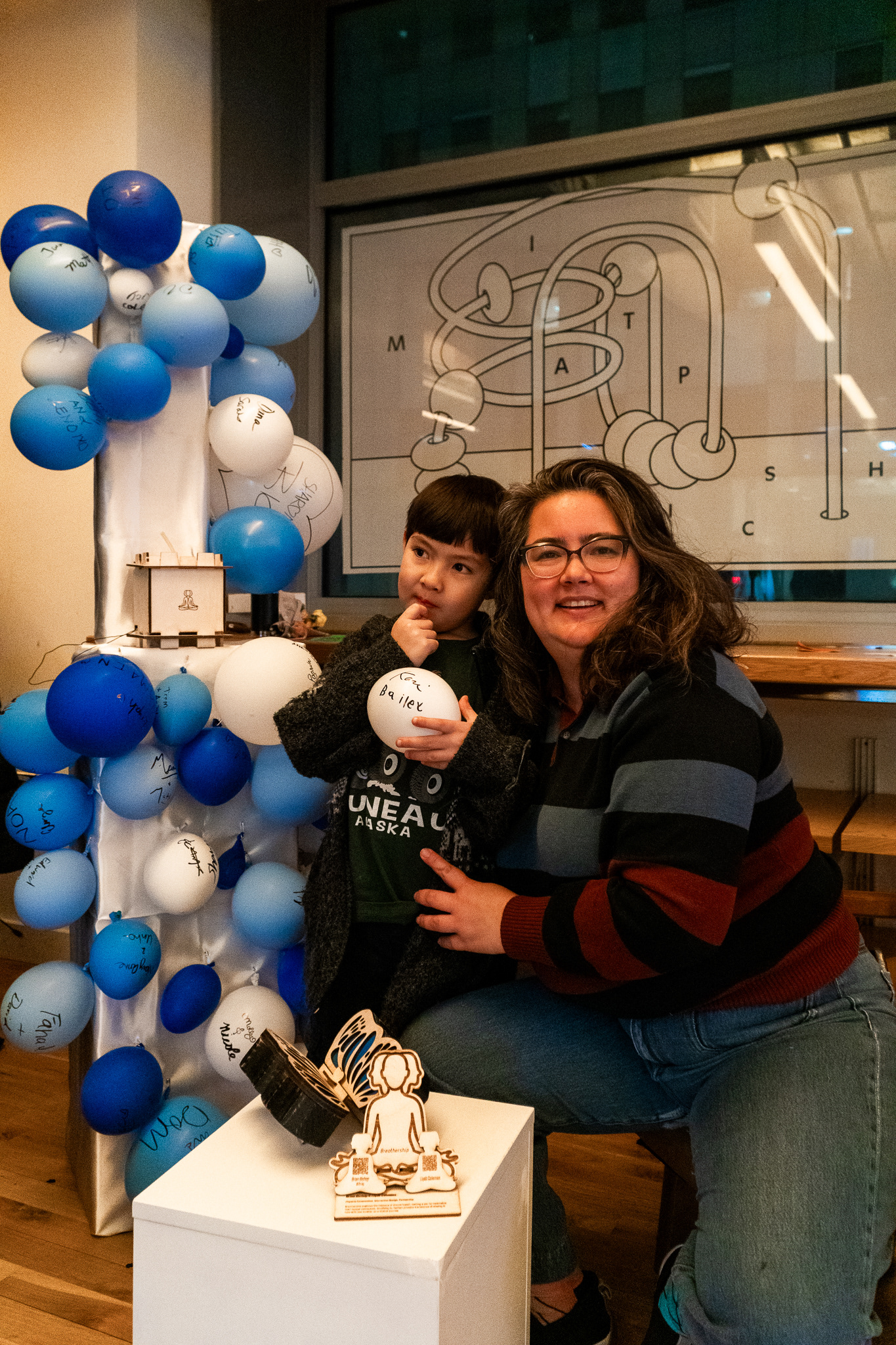
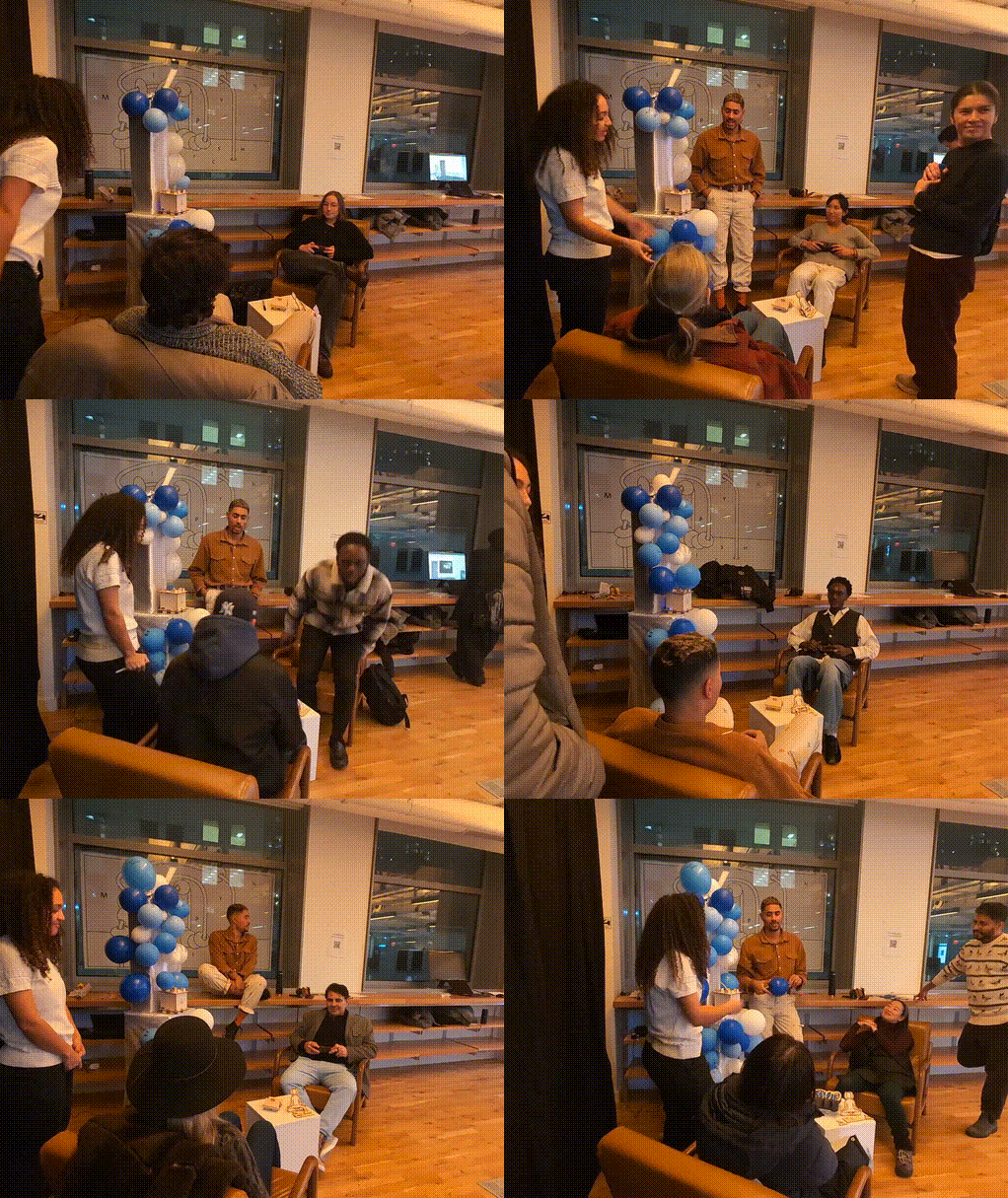
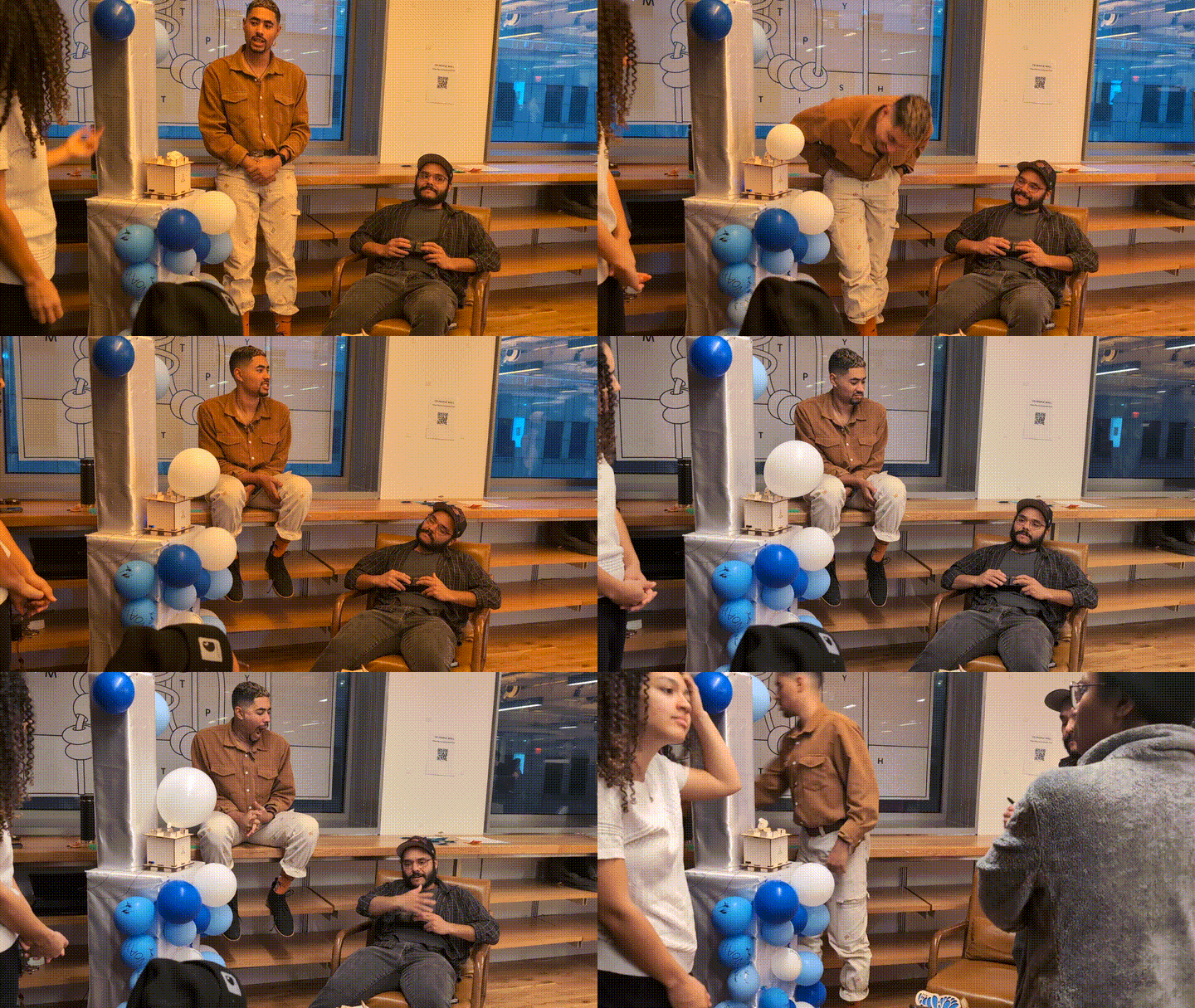
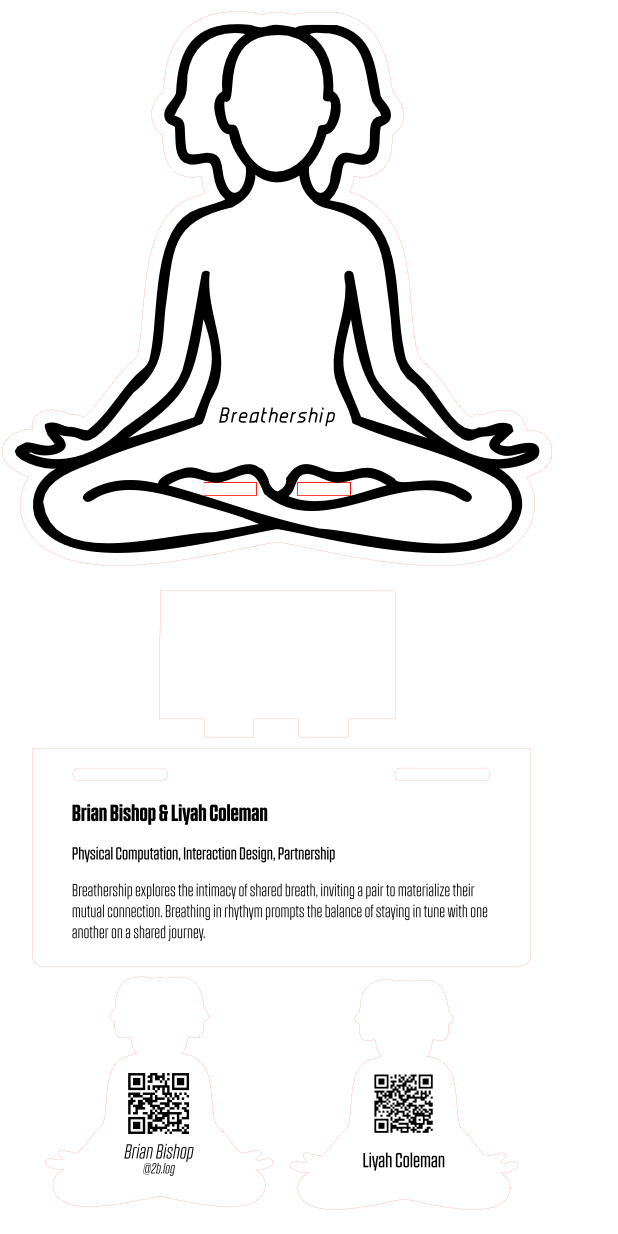
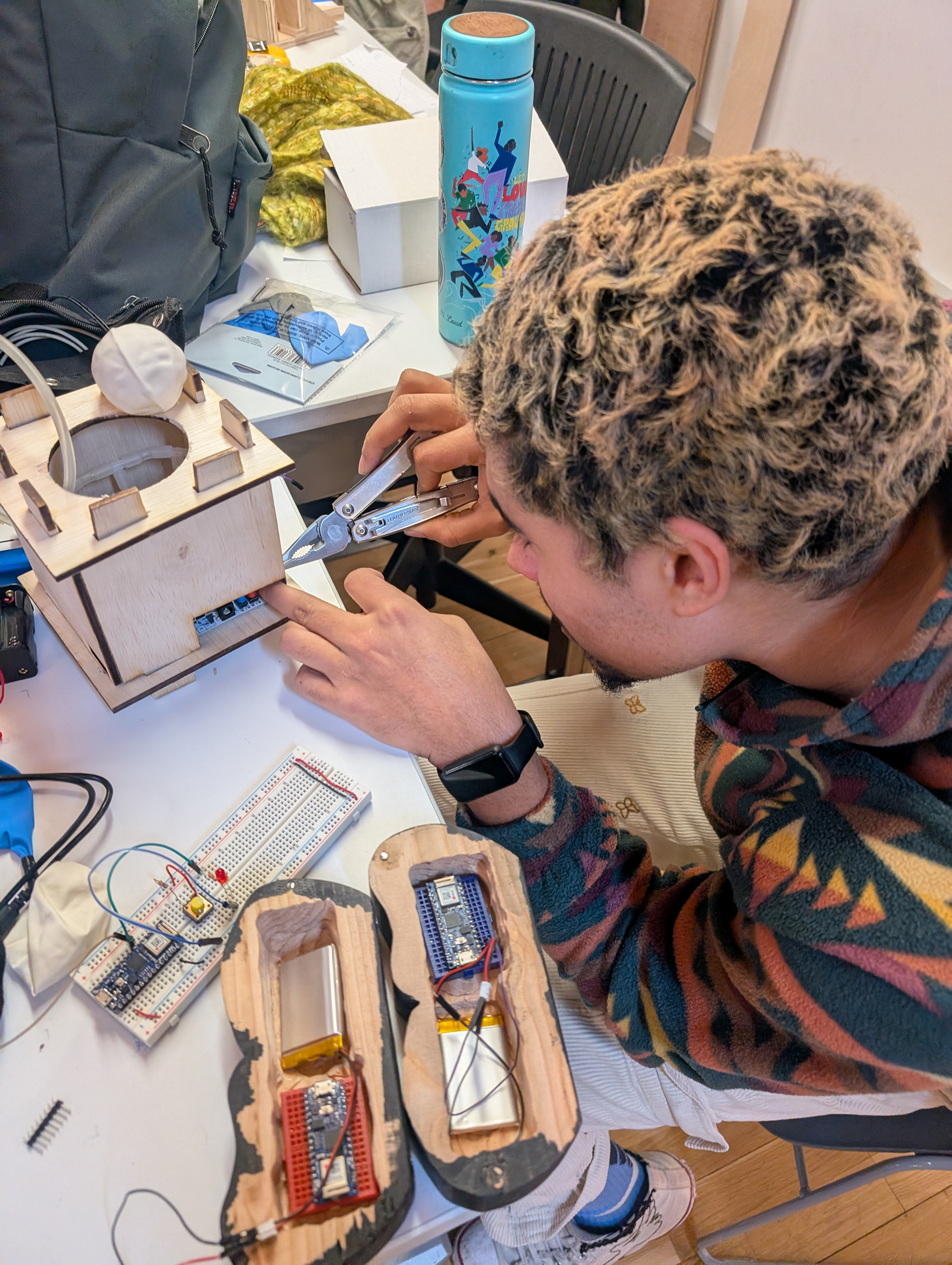
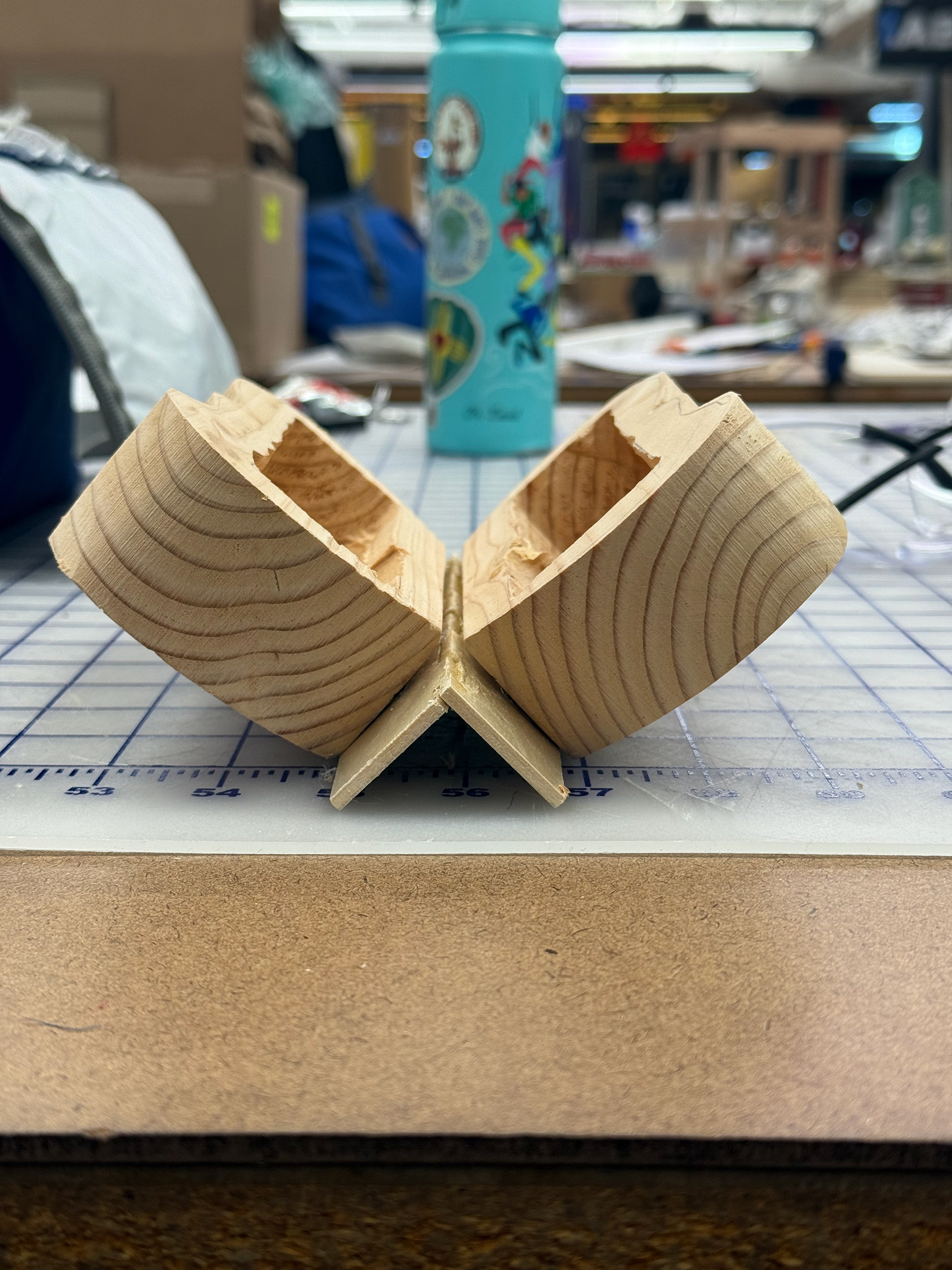
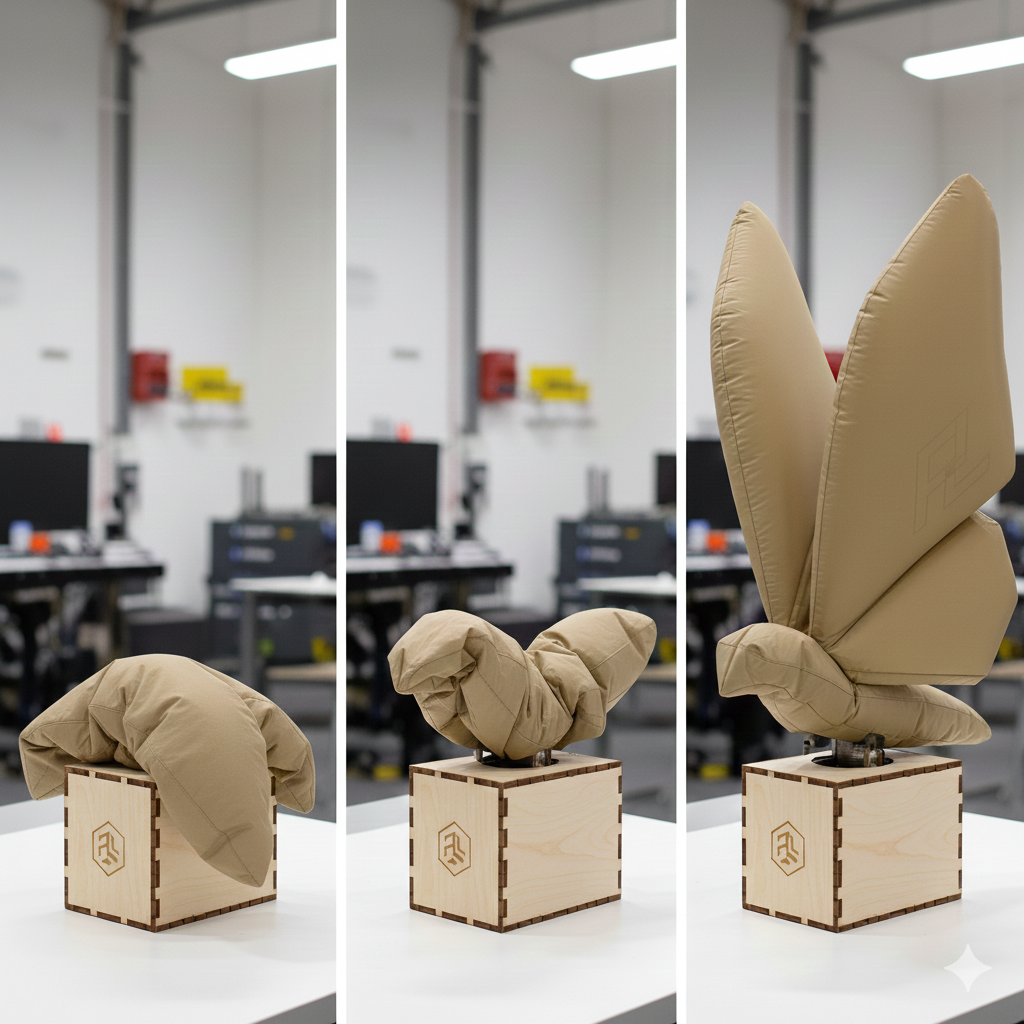
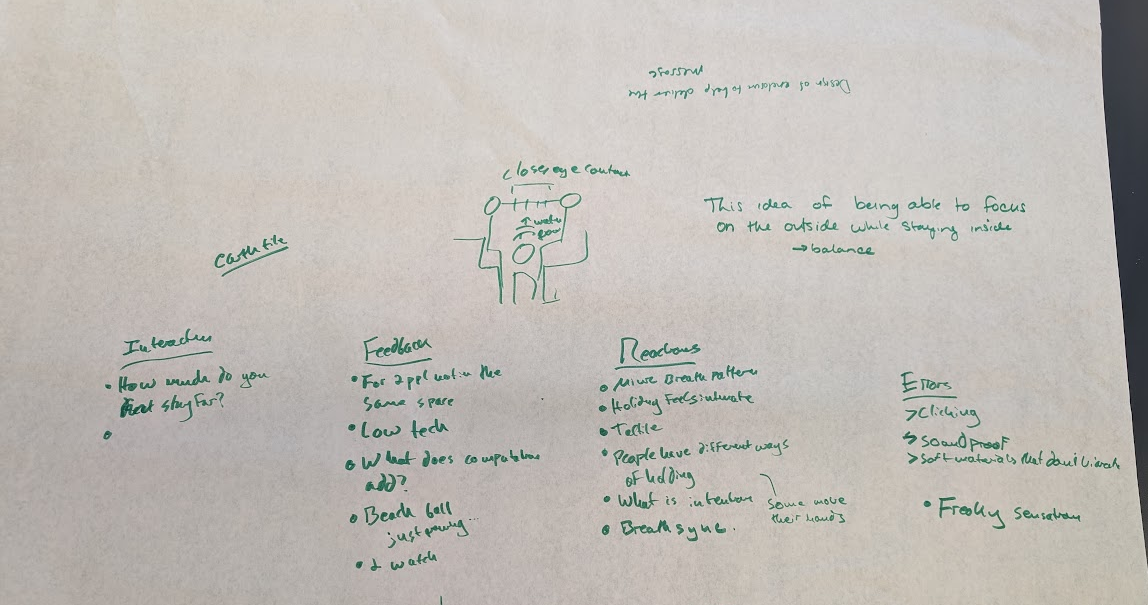
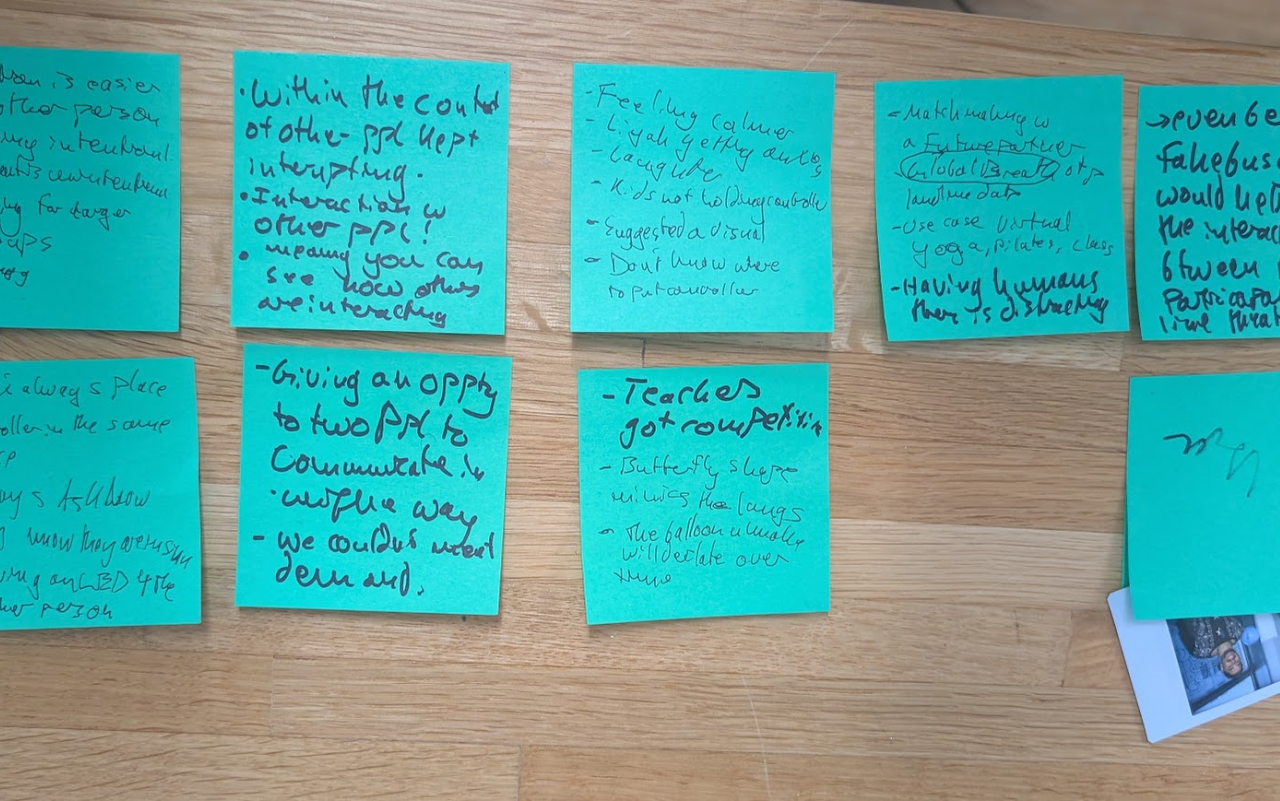
Liyah Coleman and I built Breathership for our Physical Computing final at ITP. Two people each wear a our custom breath capture controller, and when their breathing falls into sync, a shared inflatable grows using Programmable Air. The output is a collective a tree of balloons, each one a physical record of a moment of shared breath. It was presented at the ITP Winter Show, where strangers, partners, children, and parents created breathership.
Explore More: Liyah’s Documentation

Process
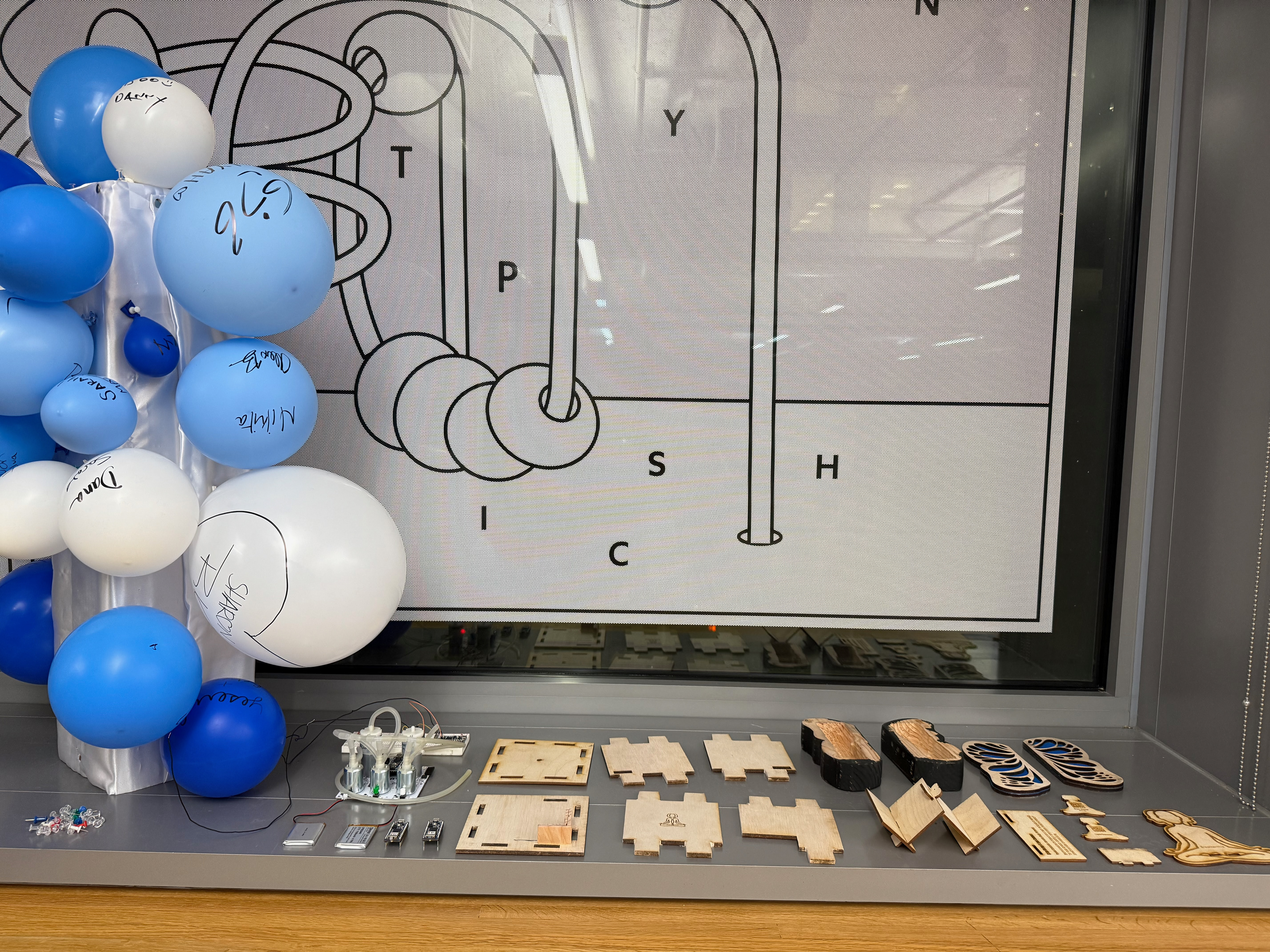
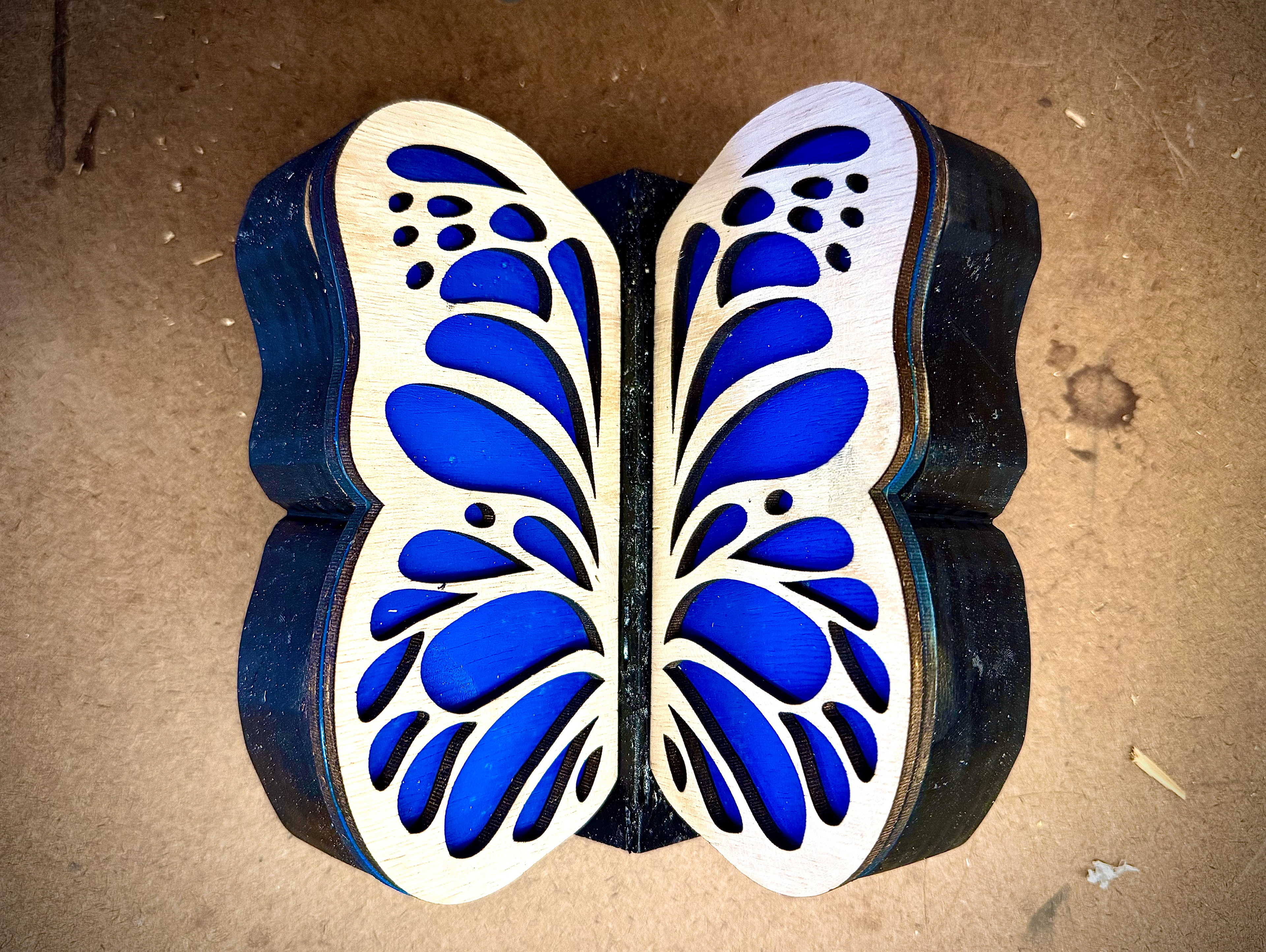
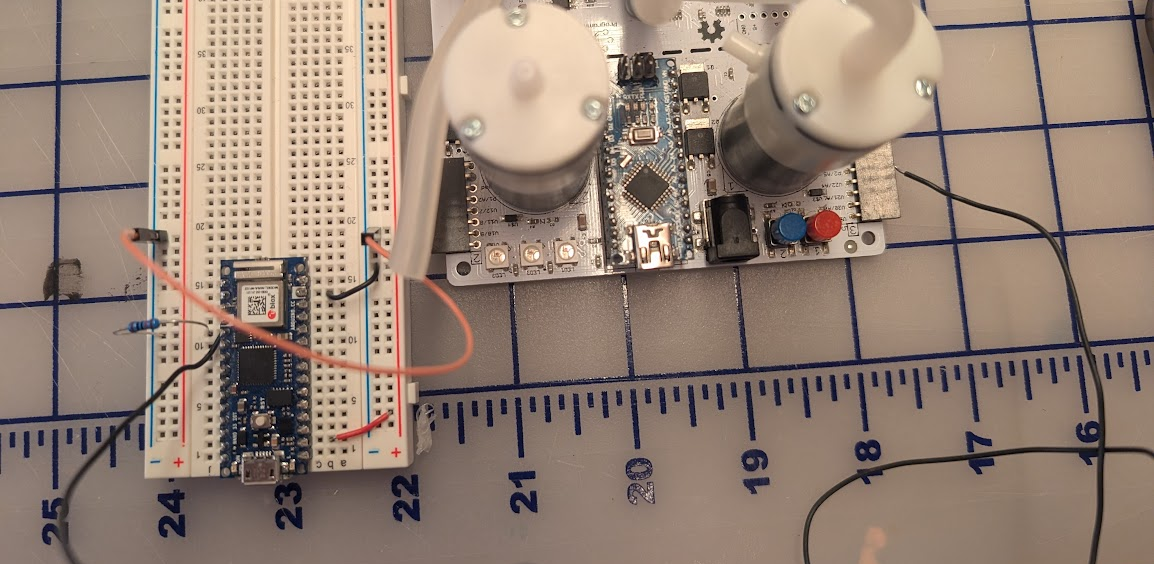
We went through several sensor approaches (stethoscope microphones, piezo sensors) before landing on the Arduino Nano 33 IoT's built-in IMU, mounted at the belly. We landed here because we found that any type of breath technique still outputs at the belly. Connecting two microcontrollers wirelessly took the most iteration, but was ultimately solved with a transistor as a signal isolator between circuits. The inflatable itself went through iterations of, Mylar, fabric patterns, until we landed on latex balloons. Lastly, we pivoted from a fixed form factor of a butterfly to an open-ended tree, letting the tree grow throughout the installation in fractal relation to each individual breathership.
Next Steps
The ITP Winter Show was the best stress test we could have asked for. Strangers found their way to sync. Parents breathed with their kids. Friends competed to grow the largest balloon. The thing we didn't anticipate: people would interpret the installation completely on their own terms - some meditative, some playful, some competitive.
Some future steps we have in mind Breathership in particular are as follows:
1. Scale to a group landscape — the natural third iteration is moving from a duo to a room full of people breathing together, with a shared inflatable ecosystem that responds to collective sync
2. Explore distance — the original inspiration was long-distance couples and families; a version that connects two people across cities is still unbuilt
Meditation Mask (Wearable)
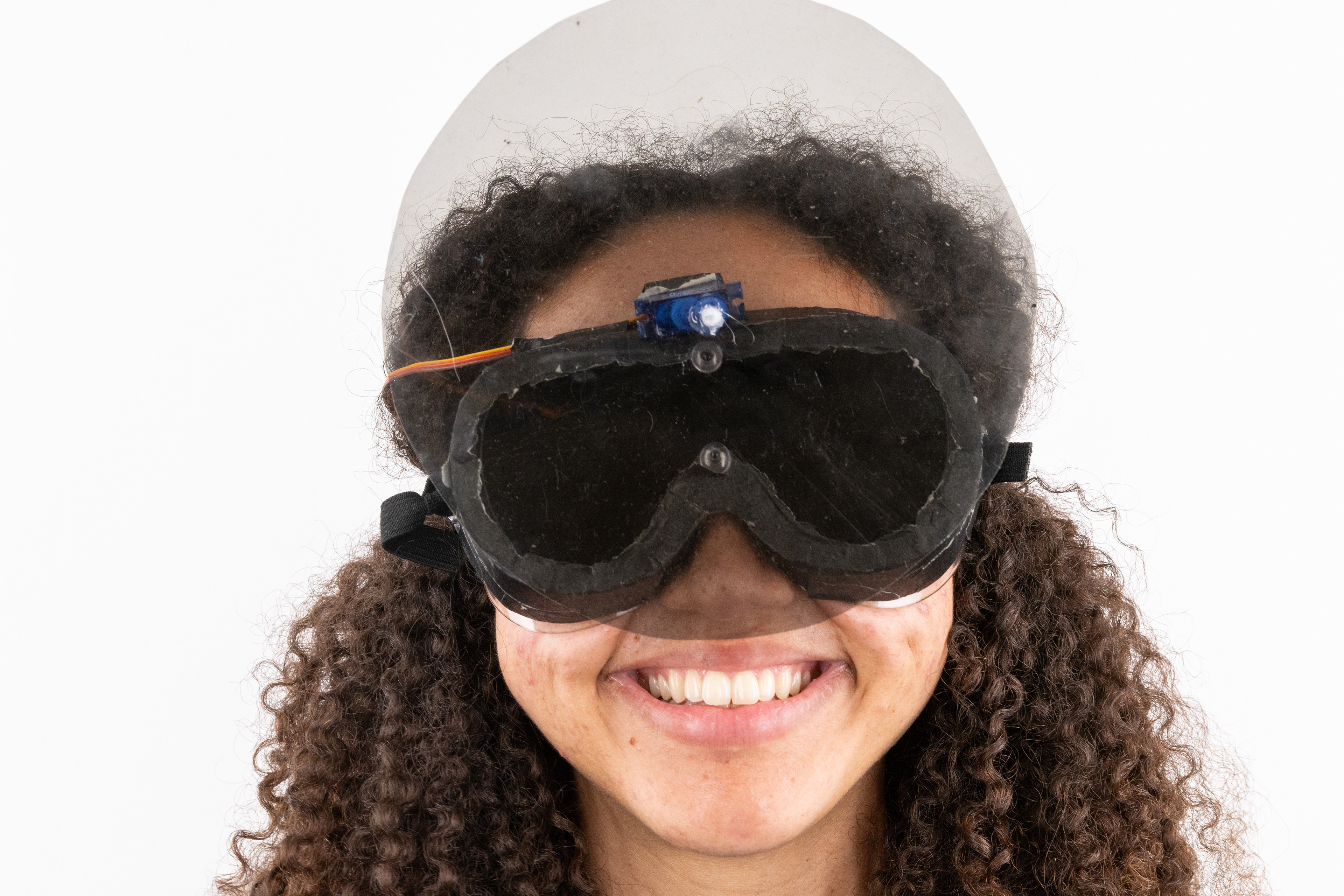
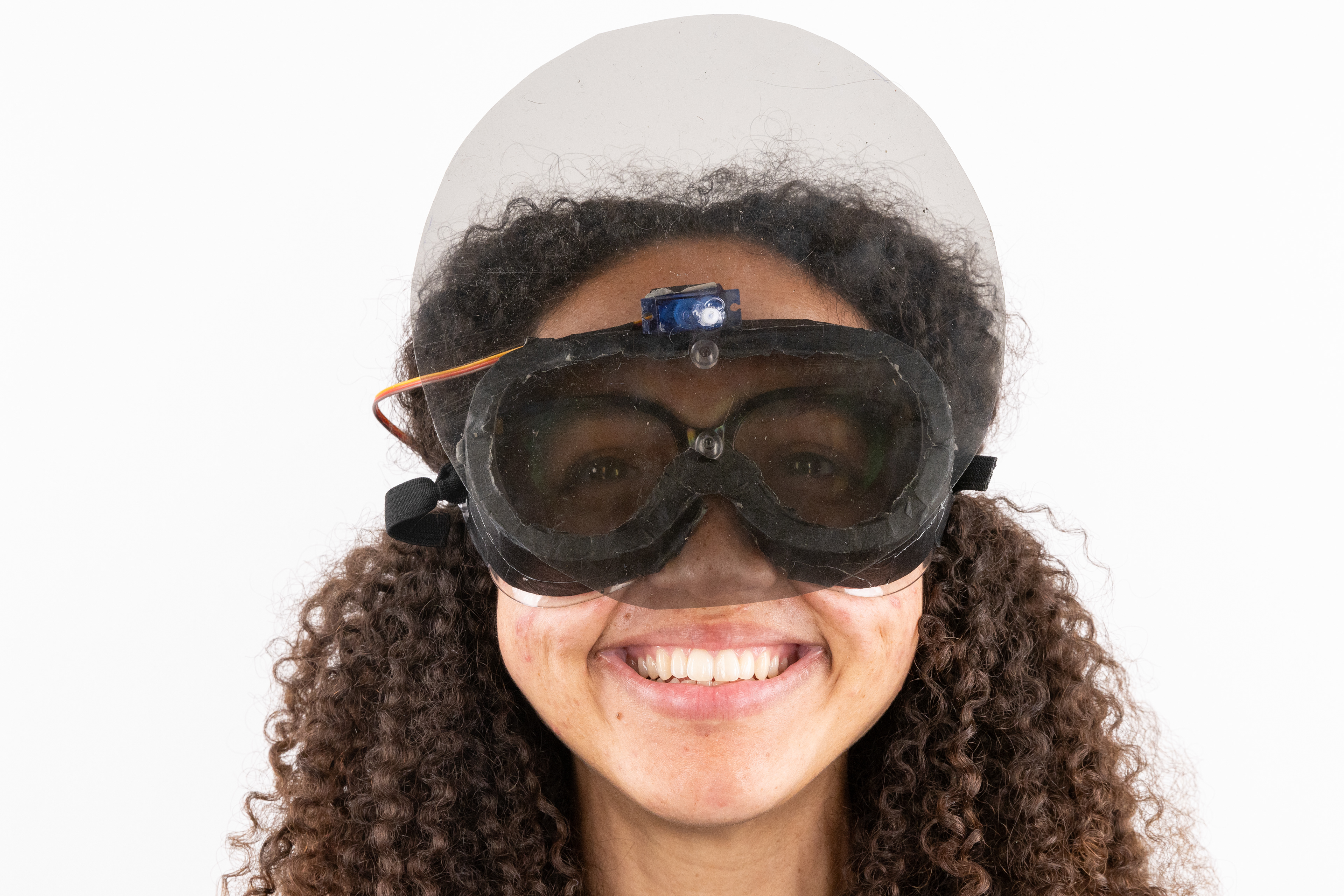
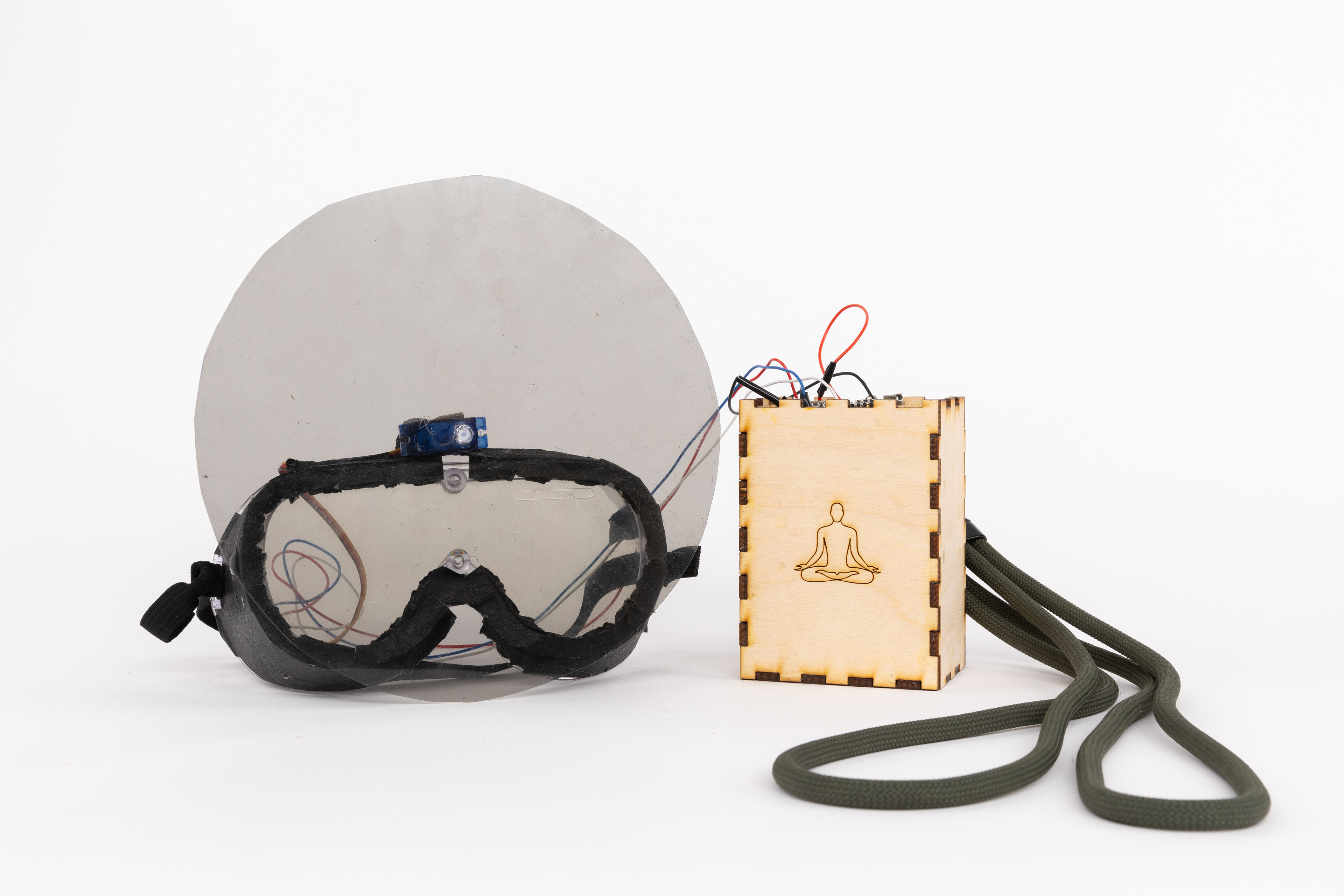
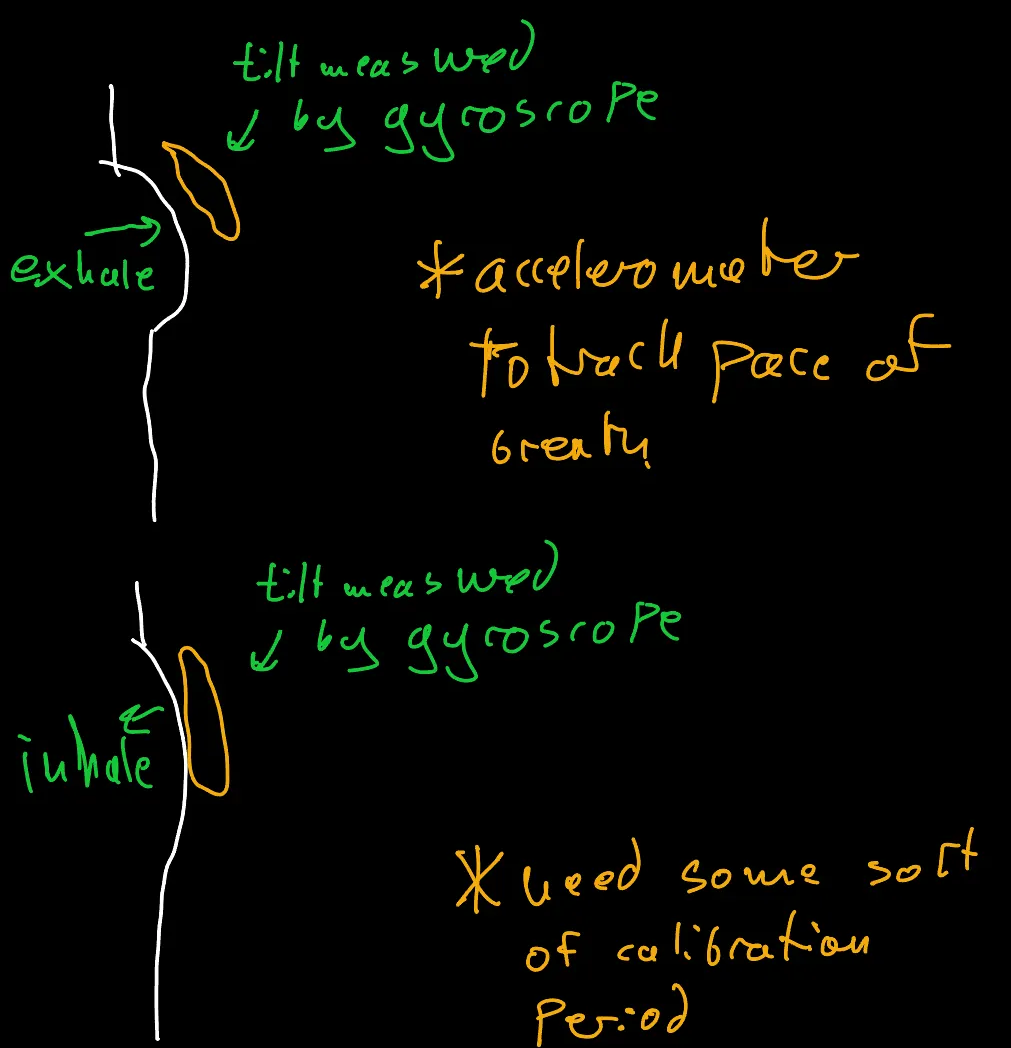
The first iteration of BAM with Liyah to create a calm, screen-free way to guide breathing and meditation. By analyzing differences between pitch and roll from IMU sensor data, we were able to track users’ breathing patterns in real time. We then synchronized a polarized lens to darken and brighten with each breath, gradually guiding the user through a timed meditation.
Process
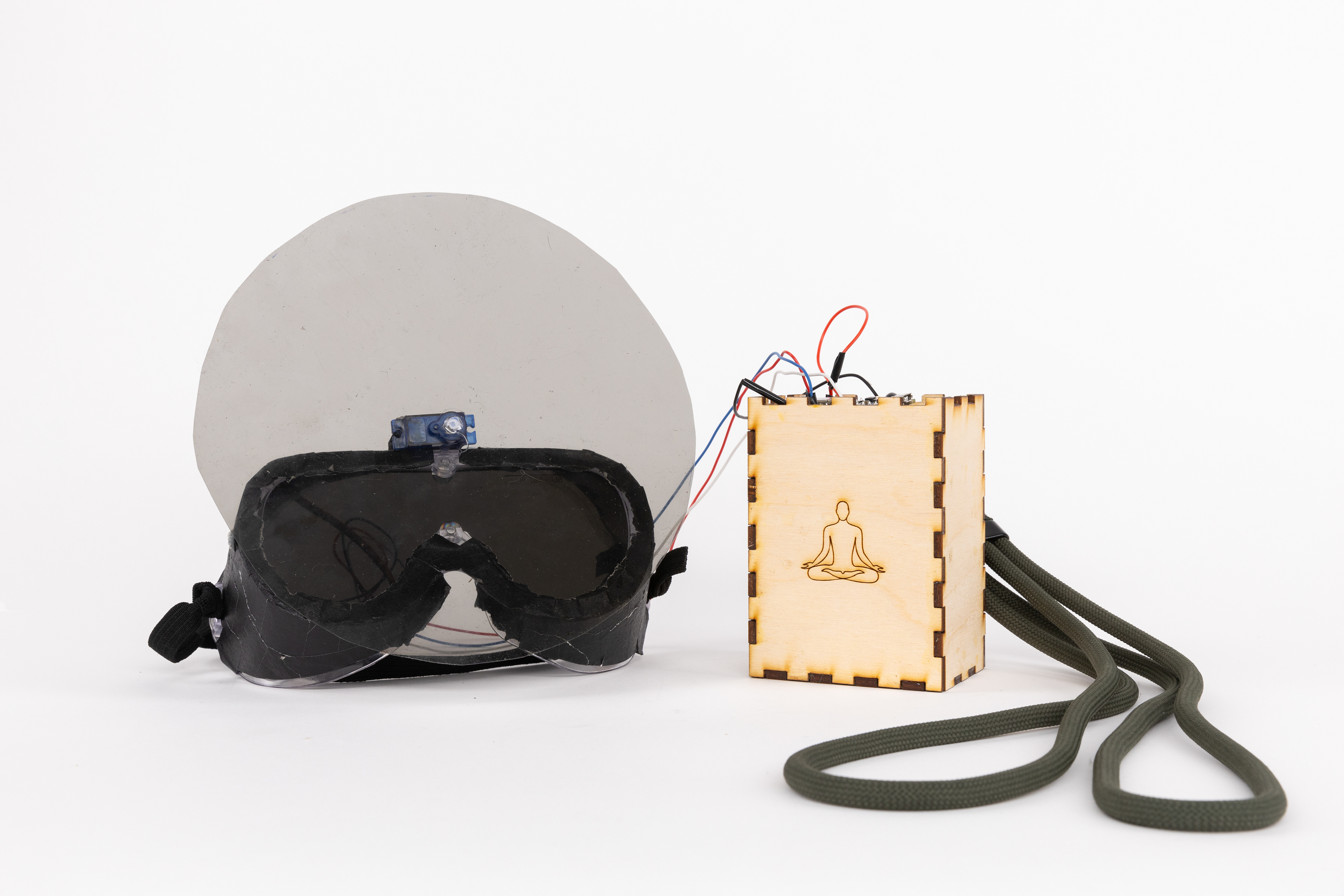
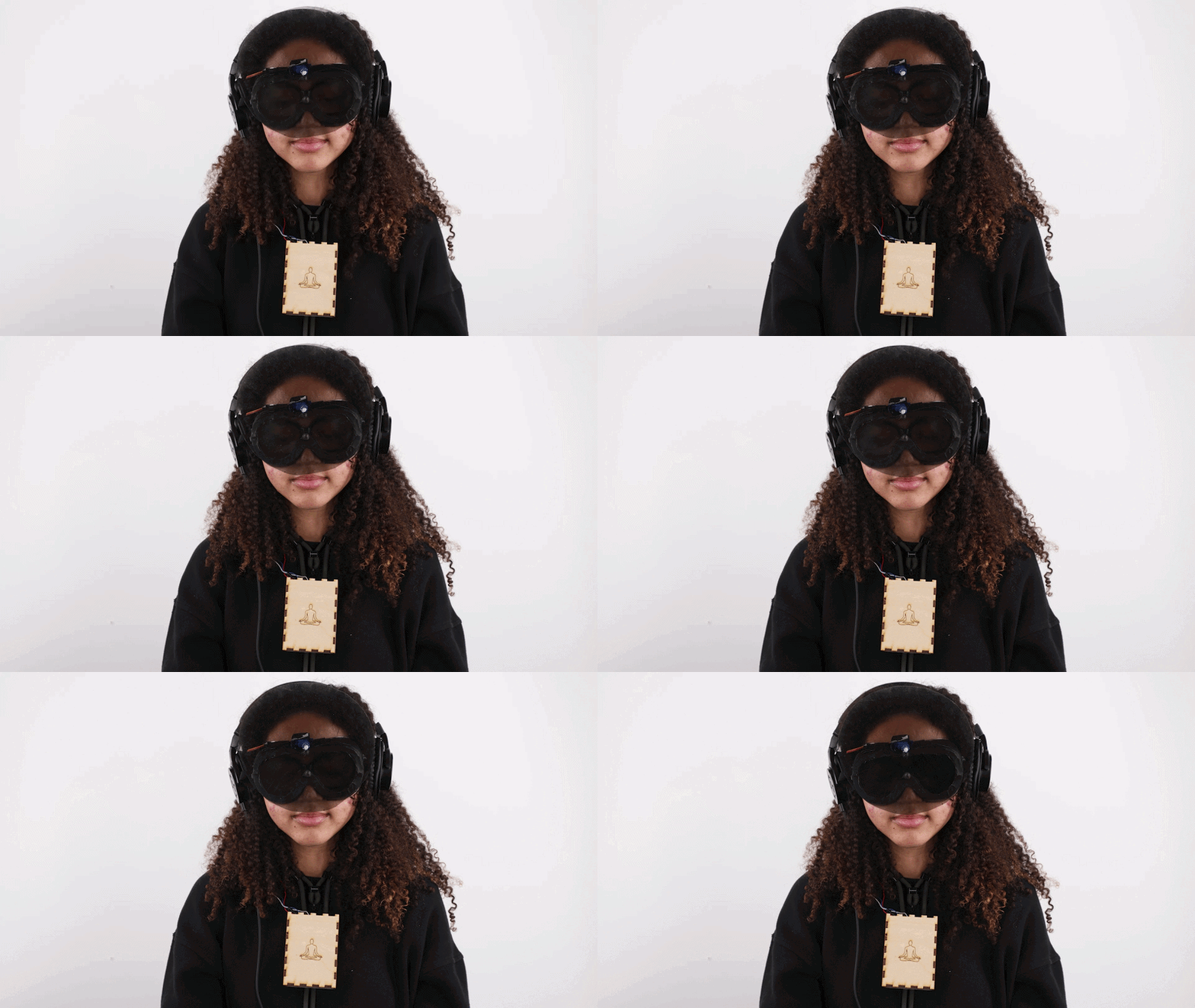
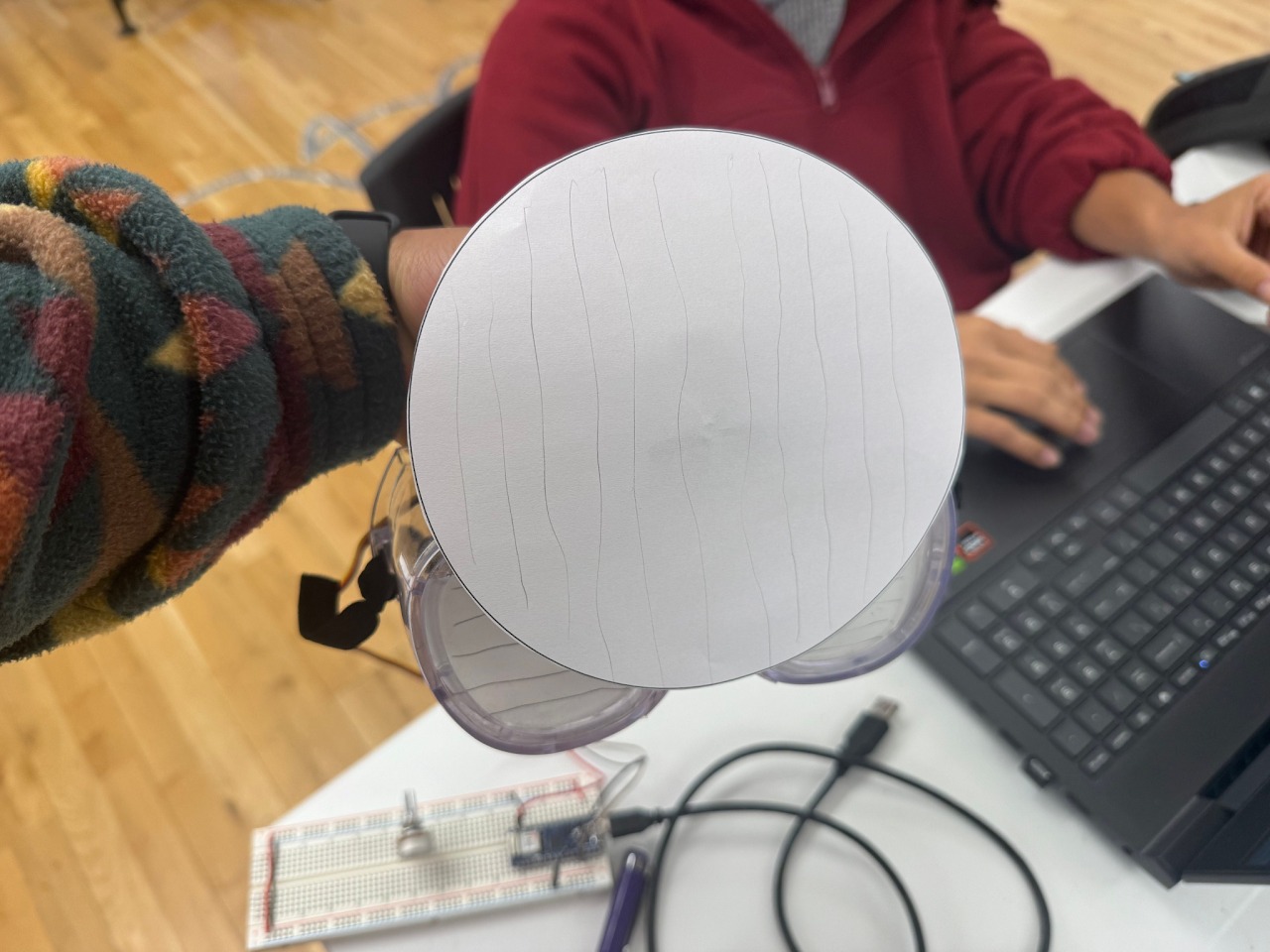
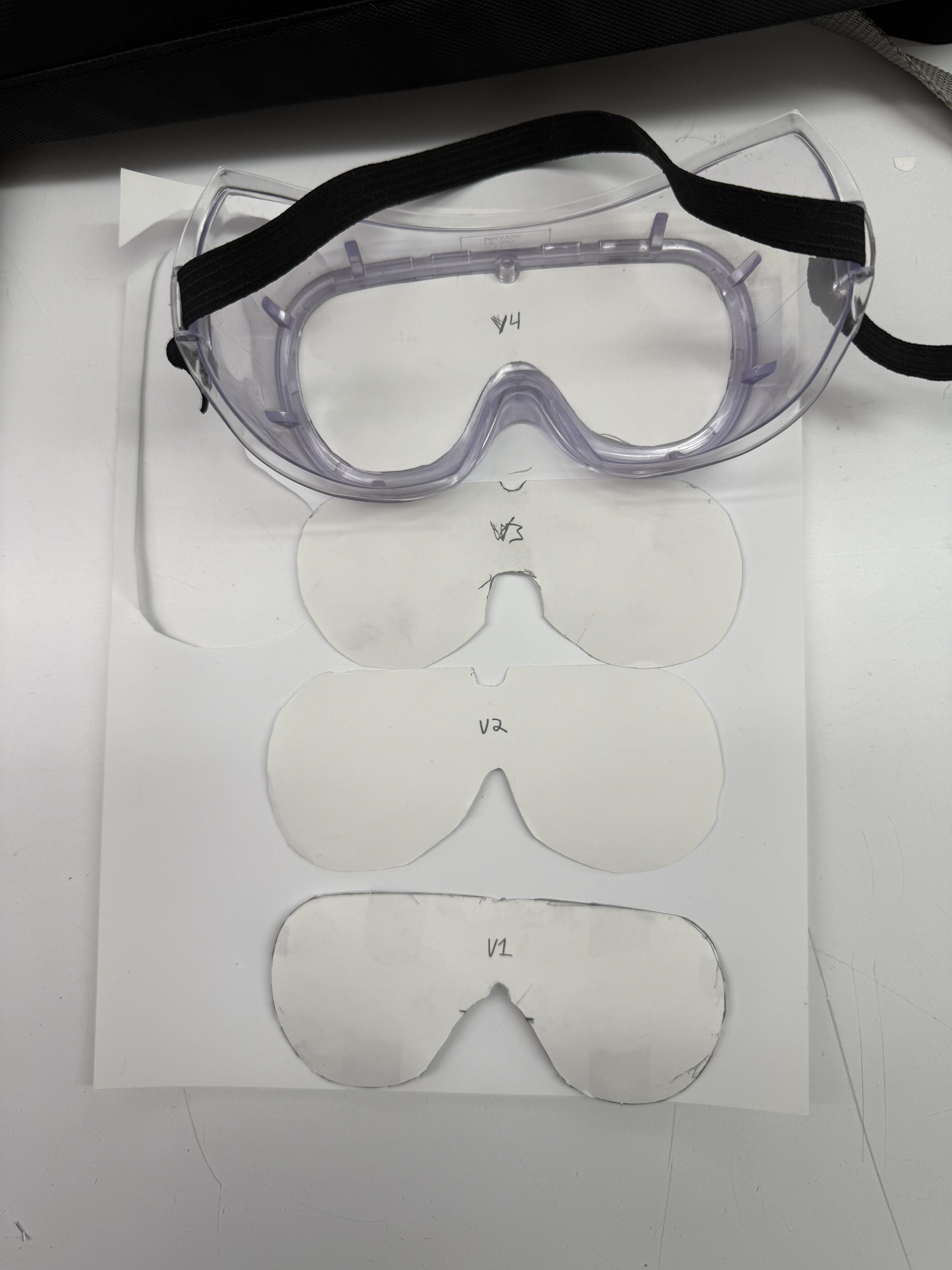
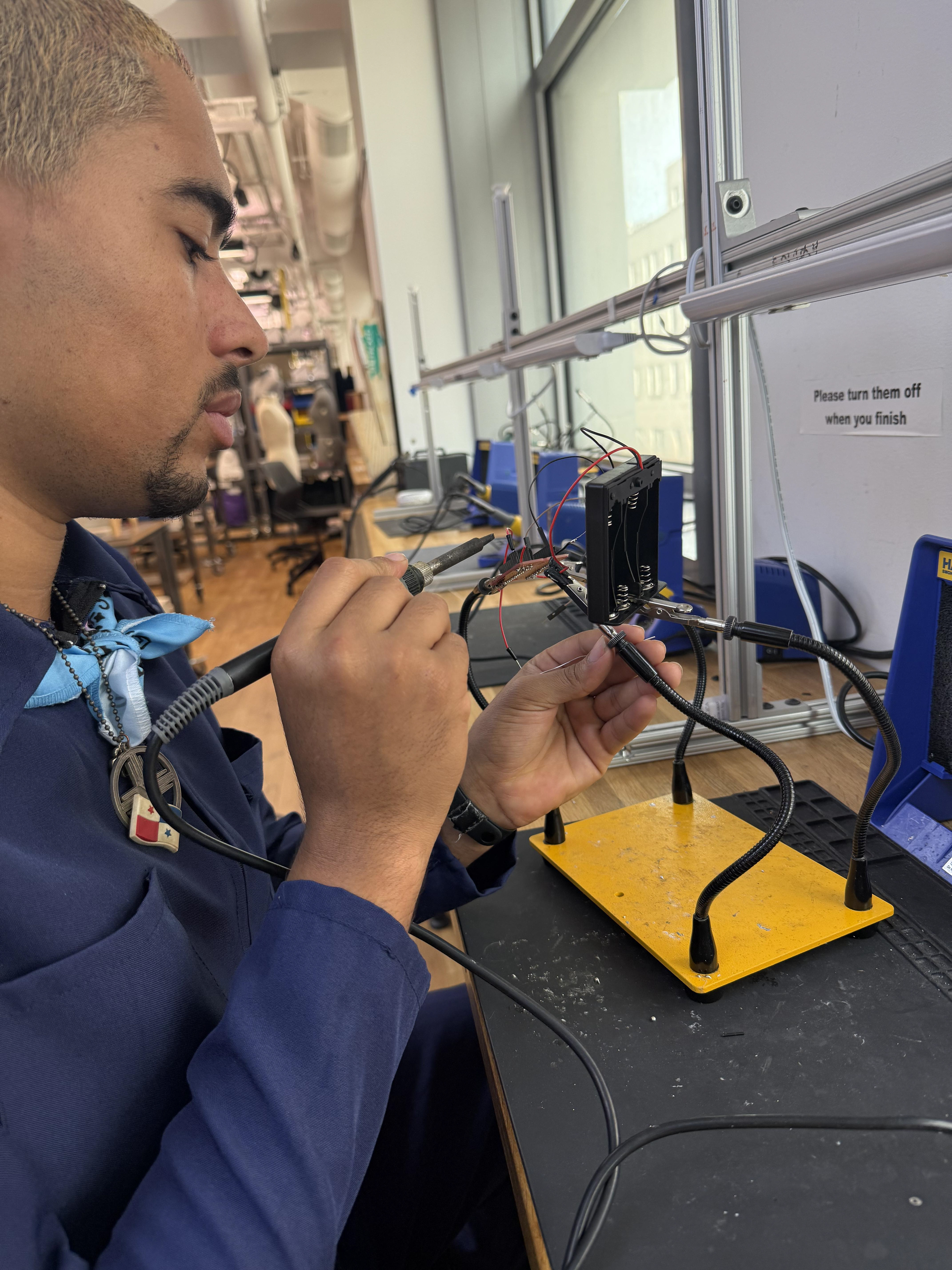
The mechanism for the meditation mask was a polarized lenses mounted on a pair of goggles, driven by a servo motor which was triggered by the microcontroller worn as a necklace and adjusted to their chest. To create this we soldered the components onto a protoboard to keep everything compact enough to wear. After the system calibrates to each user's natural breath, they would be guided through a sequence: four extended breaths to darken the lenses, four to hold in stillness, four to return to light. This was done through small rotations of the polarized lenses as they slowly rotated 90° to darken, and at the close of the session, rotated back to let the light in.
The two hardest problems were power and calibration. A 9V alkaline battery couldn't deliver consistent current to the servo motor. We went through a smaller servo before ultimately moving to four 1.5V alkaline batteries in series for more stable output. To refine calibration we implemented a sliding window using 50 IMU readings, establishing a personal baseline for each user before the session began. The system then detected when breath slowed and deepened, prompting the user to keep going. It worked well for most, but struggled with users who shifted posture mid-session, which became one of the clearest targets for a next iteration.
Next Steps
The reaction that stuck most: "It felt like the ability to meditate anywhere." This is exactly what we were going for! A device that doesn't require a studio, an app, or even silence. The polarized lens mechanic worked because it didn't tell you what to do, it just responded to you. Most people had never experienced that kind of quiet biofeedback before.
Some improvements for a next version:
* Transparent lid on the necklace enclosure so debug lights are visible without opening the box
* A start button to give users control over when calibration begins, rather than auto-triggering
* Iterate on the goggles - the servo positioning and lens rotation still had room to feel more seamless and refined
* Lithium-ion battery for consistent current to the servo motor, especially across longer sessions
* A start button to give users control over when calibration begins, rather than auto-triggering
* Iterate on the goggles - the servo positioning and lens rotation still had room to feel more seamless and refined
* Lithium-ion battery for consistent current to the servo motor, especially across longer sessions
The bigger question the Meditation Mask opened up: could this grow into a full ecosystem? Sound, haptics, noise cancellation, wind, etc. where breath is the single entry point into multiple layers of sensory experience.
BreathLace (Video Game)
BreathLace is a custom two-player arcade installation built for New Arcade at ITP. Instead of joysticks, players control the game with their breath. I brought back the two Arduino breath-sensor controllers for this project and this time fed live data into Unity where the goal isn't to beat each other, but to find each other. Players must synchronize their breathing patterns to keep their on-screen avatars overlapping inside a moving target.
Process
Built in Unity with custom C# and a serial Arduino hardware bridge. The first prototype was essentially a breath-controlled Flappy Bird: inhale to rise, exhale to fall. Simple, but it proved the hardware could drive a game in real time. The current build opens with a calibration phase where each player learns their controller through their own breath before a round begins. The end screen shows how long the pair stayed in sync, how many breaths each took, and a percentile score. Custom sprites were designed from scratch.
Next Steps
The core insight from playtesting: the game needed to slow down. Both the obstacles and the breath speed were calibrated too fast for first-time players. Basically, people were still figuring out how to use the controller while the game was already moving past them. Calibration also needs to be faster and more intuitive.
Feedback that came in:
* Slow down obstacle speed and breath response curve
* Consider a heartbeat sensor in the controller alongside breath
* Faster recalibration option mid-game for when a player loses their baseline
* More intuitive points calculation - the sync percentile is meaningful but not immediately legible
* Consider a heartbeat sensor in the controller alongside breath
* Faster recalibration option mid-game for when a player loses their baseline
* More intuitive points calculation - the sync percentile is meaningful but not immediately legible
Near-term upgrades on the roadmap
* Follow the heart calibration — adding a fun animation during calibration would help make learning the game more engaging
* Wireless + battery powered — cutting the cord is essential for a true arcade installation
* Leaderboard — track sync percentile over time so players can come back and beat their own record
* More game modes — the harmony mechanic has legs; competitive, cooperative, and solo modes are all possible
* Haptic feedback in the controllers — feeling your sync partner's breath rhythm through vibration
* Wireless + battery powered — cutting the cord is essential for a true arcade installation
* Leaderboard — track sync percentile over time so players can come back and beat their own record
* More game modes — the harmony mechanic has legs; competitive, cooperative, and solo modes are all possible
* Haptic feedback in the controllers — feeling your sync partner's breath rhythm through vibration
The larger vision:
* Any number of players — the code and sprite system built to scale beyond two
* iPhone connect — enter the game via phone, no dedicated hardware required
* Worldwide breath — a live, networked version where strangers anywhere can sync with each other in real time. The dream is a global installation where breath becomes a commons.
* iPhone connect — enter the game via phone, no dedicated hardware required
* Worldwide breath — a live, networked version where strangers anywhere can sync with each other in real time. The dream is a global installation where breath becomes a commons.